
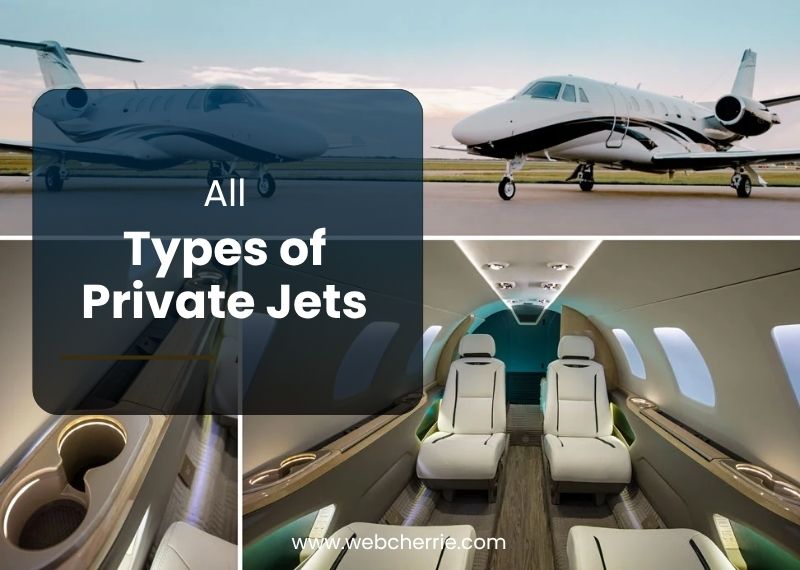
Choosing a private jet isn’t just about size. It’s about matching an aircraft’s range, cabin space, and performance to the actual trip you’re planning. A weekend hop to a nearby city calls for a completely different aircraft than a nonstop flight from New York to Dubai.
Private aviation typically breaks aircraft into distinct categories: turboprops, very light jets, light jets, midsize jets, super-midsize jets, heavy jets, and ultra-long-range jets. Each class serves a specific mission profile built around passenger capacity, nonstop range, cabin height, and operating cost.
Here’s a full breakdown of every category, the aircraft that define them, and who each one is actually built for.
Turboprops: The Entry Point to Private Travel
Turboprops sit just below jets in speed but often outperform them on short regional routes, especially into smaller airports with shorter runways.
These aircraft use propellers driven by turbine engines rather than pure jet thrust. That design makes them more fuel efficient on short legs and capable of landing at airstrips that jets simply can’t use.
Popular models include the Pilatus PC-12, King Air 350i, and TBM 940. Most seat between six and nine passengers and cover distances up to around 1,500 nautical miles.
Turboprops make sense for regional business travel, trips to remote or rural destinations, and travelers who want private aviation without the cost of a jet.
Stop scrolling. Start planning.
Explore private jet options and find a flight that fits your destination and schedule.
Very Light Jets: Compact, Efficient, and Affordable
Very light jets, often called VLJs, are the smallest true jets in private aviation. They’re designed for short trips, typically under three hours, and usually carry between four and seven passengers.
The HondaJet Elite II and Embraer Phenom 100EV are two of the most recognized names in this category. Both are known for efficient fuel burn and low operating costs relative to other jets.
VLJs are a popular entry point for owner-pilots and for business travelers making frequent short hops between nearby cities. They typically have lower cabin height too, so headroom is limited compared to larger categories.
Light Jets: The Workhorse of Regional Private Travel
Light jets extend the range and comfort of very light jets while keeping strong access to smaller regional airports. Most light jets seat six to eight passengers and fly roughly 1,500 to 2,000 nautical miles, enough to connect most major cities within a few hours.
Common examples include the Cessna Citation CJ4, Citation M2, Embraer Phenom 300E, and Learjet 75. The Phenom 300E in particular is often considered the top seller in this class thanks to its balance of speed, range, and cabin comfort.
Light jets are a strong fit for corporate shuttles, short business trips, and small groups who prioritize speed and efficient turnaround over cabin size. If you’re booking a charter for a same-day round trip between regional hubs, this is usually the category that makes the most operational and financial sense.
Midsize Jets: More Cabin Space, Longer Range
Midsize private jets step up in nearly every way. They introduce a stand-up cabin, meaning most adults can walk the aisle without ducking, along with more legroom, larger lavatories, and increased baggage capacity.
Range typically falls between 2,200 and 2,700 nautical miles, putting most coast-to-coast domestic routes and short international hops within reach. Passenger capacity usually runs from seven to nine.
The Cessna Citation XLS+, Citation Latitude, and Hawker 900XP are all well-known midsize aircraft. These jets are frequently chosen by business travelers who need to combine several stops in a single day, or families who want a comfortable cabin without moving up to a larger, more expensive aircraft.
Super-Midsize Jets: The Sweet Spot for Value and Range
Super-midsize private jets bridge the gap between midsize and heavy categories, and they’re often described as the best value tier in private aviation. Range extends to roughly 3,000 to 3,700 nautical miles, enough for nonstop transcontinental flights or regional international travel across the Atlantic under the right conditions.
Aircraft in this class include the Bombardier Challenger 3500, Embraer Praetor 600, and Gulfstream G280. Cabins are noticeably wider and taller than midsize jets, and most seat eight to ten passengers comfortably with room for a full galley and enclosed lavatory.
This category tends to draw business executives, larger families, and small groups traveling longer distances who still want efficient operating costs without stepping up to a large-cabin aircraft.
Heavy Jets and Large Cabin Aircraft: Space to Work, Rest, and Entertain
Heavy jets, sometimes called large cabin jets, are where private aviation starts to feel more like a private residence than a flight. These aircraft typically carry ten to nineteen passengers and offer multiple cabin zones, meaning separate areas for meetings, dining, and sleeping on longer flights.
The Bombardier Challenger 650, Gulfstream G500, and Gulfstream G600 represent this class well. Range generally runs from 4,000 to 6,000 nautical miles, which covers most intercontinental routes without a fuel stop.
Heavy jets are the go-to choice for larger groups, corporate teams traveling together, and anyone who values a full-service cabin experience on longer international trips.
Ultra-Long-Range Jets: Nonstop Between Continents
At the top of the market sit ultra-long-range jets, built to fly nonstop between almost any two points on earth. These aircraft can cover 6,000 to 8,000 nautical miles or more, connecting cities like New York and Hong Kong or Los Angeles and Singapore without a refueling stop.
The Gulfstream G650ER, G700, and G800, along with the Bombardier Global 7500 and the newly arriving Global 8000, define this segment. Cabins often include dedicated bedrooms, full standing showers, and separate lounge areas, with seating for up to nineteen passengers depending on configuration.
This category is built for heads of state, ultra-high-net-worth individuals, and corporations that need to move executives across the globe with total flexibility and privacy.
How to Actually Choose the Right Category
The mistake most first-time charter clients make is picking a jet based on prestige rather than mission. The right category depends on a few practical questions.
How many passengers are actually flying, and how much luggage are they bringing? What’s the real distance between departure and destination, including any need to avoid a fuel stop? Does the trip require landing at a smaller regional airport with a shorter runway? And how much time will be spent in the cabin, since a three-hour flight has very different comfort needs than an eleven-hour one?
Matching the aircraft to these factors, rather than defaulting to the biggest available option, is usually what keeps a charter both comfortable and cost-effective. This is also where working with an experienced charter broker like Villiers Jets makes a real difference, since access to a global fleet across every one of these categories means the aircraft can be matched to the actual trip rather than whatever happens to be available locally.
Stop scrolling. Start planning.
Explore private jet options and find a flight that fits your destination and schedule.
Summary
Private jets aren’t a single product, they’re a spectrum of aircraft built for very different missions. From a turboprop hopping between small regional airports to an ultra-long-range jet crossing oceans nonstop, each category exists to solve a specific travel problem.
Understanding these distinctions, cabin size, range, passenger capacity, and operating cost, makes it far easier to book the right aircraft for the right trip, whether that’s a quick regional flight or a full intercontinental journey.