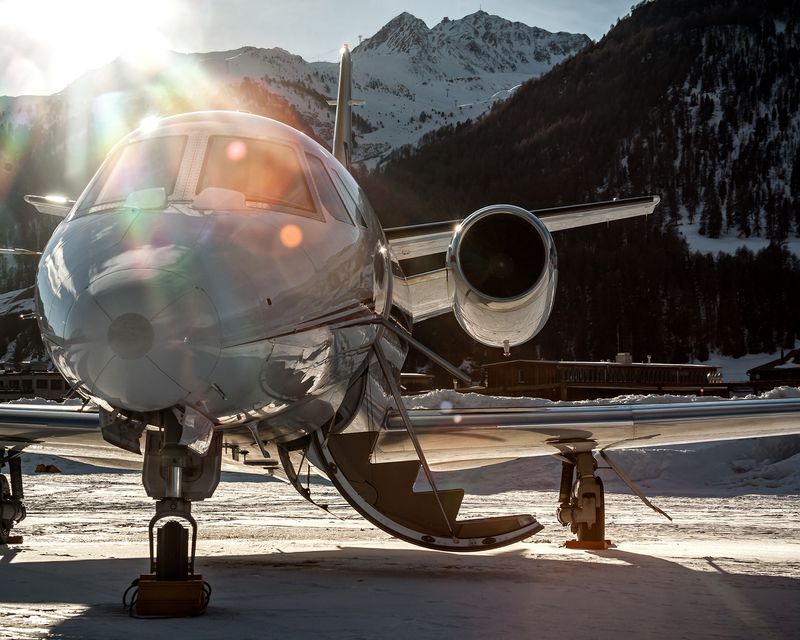

Anyone shopping for a charter eventually hits the same fork in the road. Do you need a heavy jet, or will a super midsize jet get the job done for less money?
Both categories sit near the top of private aviation, and on paper they can look similar. Stand up cabins, long range, private lavatories, real workspace in the air. But the gap between them shows up fast once you look at actual mission range, passenger count, and hourly rates.
This guide puts heavy jets and super midsize jets side by side so you can match the aircraft to the trip instead of paying for capability you don’t need, or booking something too small for the route.
Stop scrolling. Start planning.
Explore private jet options and find a flight that fits your destination and schedule.
The Quick Answer
A super midsize jet works well for domestic coast to coast trips, short international hops, and groups of 6 to 10 passengers who want a fast, comfortable cabin without heavy jet pricing.
A heavy jet becomes the right call once your trip crosses an ocean with a full passenger load, needs a private rest area for an overnight flight, or involves a large group with a lot of luggage.
The rest of this guide breaks down exactly why.
What Separates a Heavy Jet From a Super Midsize Jet
The core difference comes down to three things: range, cabin size, and mission type.
Super midsize private jets typically cruise between 3,000 and 4,000 nautical miles, carry 8 to 10 passengers, and reach cruise speeds of roughly 450 to 530 knots. That range covers nonstop transcontinental US flights and select transatlantic routes, but it stops short of true global reach.
Heavy private jets push past that ceiling entirely. Most models fly between 6,000 and over 8,000 nautical miles, seat 10 to 19 passengers, and are built around missions like New York to London or Los Angeles to Tokyo, routes a super midsize aircraft simply cannot complete without stopping to refuel.
So while both categories offer a stand up cabin and long range compared to lighter jets, only one of them is actually designed for full intercontinental travel.
Range and Speed Compared
Range is usually the first thing that decides which category makes sense, since it determines whether your route needs a fuel stop.
Leading super midsize aircraft like the Bombardier Challenger 350, the Cessna Citation Longitude, and the Embraer Praetor 600 fly somewhere between 3,200 and just over 4,000 nautical miles. The Praetor 600 sits at the top of that range, which opens up some transatlantic city pairs that most of its competitors can’t reach nonstop.
Heavy jets operate in a different league. The Gulfstream G650ER flies close to 7,500 nautical miles, the Bombardier Global 7500 is regularly cited as having one of the longest published ranges in business aviation, and the newer Gulfstream G800 pushes toward 8,000 nautical miles in some configurations. These aircraft can connect city pairs on opposite sides of the planet without landing to refuel.
Speed tells a slightly different story. Some super midsize jets, particularly the Cessna Citation X+ cruising near Mach 0.935, are actually faster than many heavy jets on a point to point basis. So if raw speed on a shorter route is the priority, a super midsize aircraft can sometimes win that comparison even though it can’t match a heavy jet’s range.
Cabin Size and Passenger Capacity
Both categories offer a cabin tall enough to stand in, which already puts them well ahead of light and midsize jets. The real difference is how much space you get to work with once everyone is onboard.
Super midsize cabins typically seat 8 to 10 passengers comfortably, with enough baggage capacity for a business trip or a shorter vacation. Models like the Citation Longitude and Gulfstream G280 are known for wide cross sections that make the cabin feel larger than the seat count suggests.
Heavy jets are built around a completely different scale. Cabins are usually split into two or three separate zones, often a front area for meetings or dining, a middle lounge, and a private aft suite with a berthable divan or dedicated bed. This layout matters enormously on flights longer than eight hours, since passengers can actually rest instead of staying seated the entire way. Baggage room is also significantly larger, which matters for families packing for a week or a group traveling with equipment.
If everyone on the flight needs to sleep, spread out, or hold a private conversation away from the group, that’s a heavy jet advantage that super midsize cabins generally can’t replicate.
Charter Cost Comparison
Cost is where the two categories separate the most clearly, and it’s usually the deciding factor once range requirements are met by both.
Super midsize charter rates generally run between $5,500 and $10,500 per hour, depending on the aircraft, operator, and route.
Heavy jet charter rates start around $8,000 per hour and can reach $12,000 or more, again depending on the specific aircraft and mission.
There’s meaningful overlap in the middle of both ranges, which means a longer super midsize flight can sometimes cost close to what a shorter heavy jet trip would. This is exactly why matching the aircraft to the actual route matters more than just picking a category by name. Paying heavy jet rates for a trip a super midsize aircraft could handle just as well is one of the most common overspends in private charter.
Who Should Book Each Category
Choose a super midsize jet if:
You’re flying coast to coast within the US, taking a short international trip, traveling with 6 to 10 passengers, or need a fast, comfortable cabin for business travel without paying for capability the route doesn’t require.
Choose a heavy jet if:
You’re crossing an ocean with a full passenger load, flying overnight and need real rest space, traveling with a large group and significant luggage, or your itinerary touches multiple continents on one trip.
Families heading to Europe for an extended stay, corporate teams closing an international deal, or a group flying with sports or production equipment are the travelers who consistently land in the heavy jet category. Business travelers making a quick trip across the country, or a family flying to a domestic destination for a long weekend, are usually well served by a super midsize aircraft instead.
Making the Right Call for Your Trip
The category names can make this decision feel more complicated than it actually is. In practice, it comes down to two questions: can a super midsize jet complete your route nonstop with the group and luggage you’re bringing, and does the trip length justify the extra hourly cost of a heavy jet.
If you’re still weighing the two, it helps to look at the broader picture first. Our guide to types of private jets walks through every category from light jets up through ultra long range aircraft, and our midsize vs light jet comparison is useful if you suspect your trip might actually call for something smaller than super midsize.
At WebCherrie, we work with clients on both ends of this decision, matching the aircraft to the route rather than pushing one category by default, since the right jet for a coast to coast business trip is rarely the right jet for a transatlantic family vacation. If you already know your route and passenger count, that’s usually enough to get an accurate recommendation before you book.
Stop scrolling. Start planning.
Explore private jet options and find a flight that fits your destination and schedule.