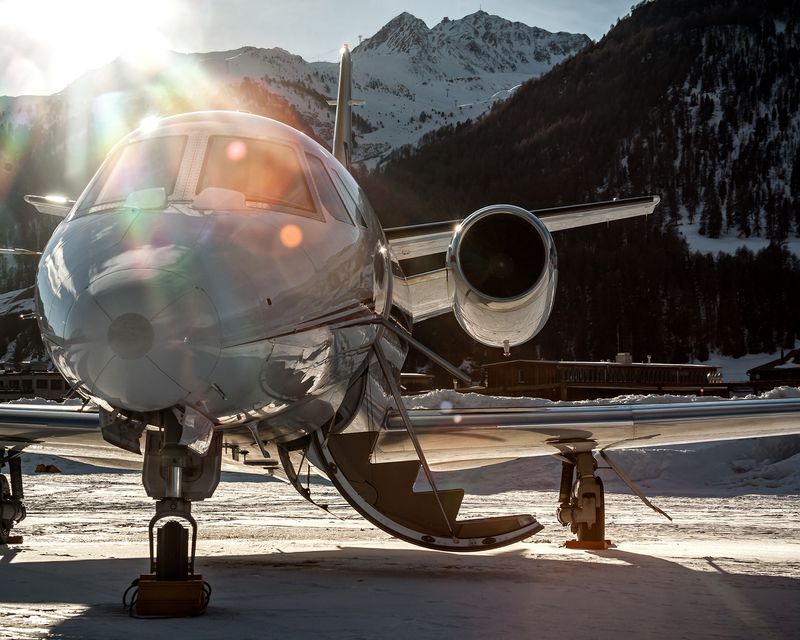
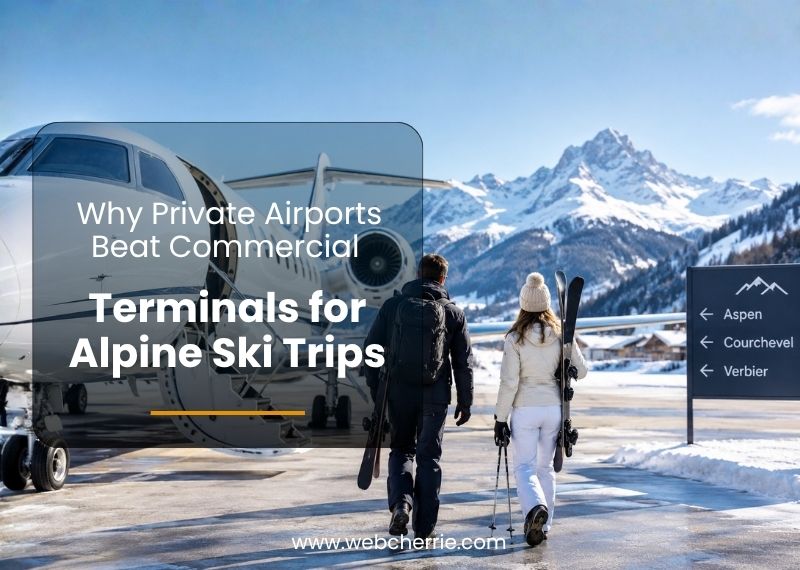
A ski trip to the Alps or the Rockies starts losing its magic the moment you’re stuck in a security line with boot bags and ski cases. Commercial terminals were never built for mountain travel. Private aviation was, in many ways, designed exactly for it. The runways are shorter, the mountains are closer, and the whole point is getting travelers from the tarmac to the chalet in the least amount of time possible.
That’s the real argument for flying private into ski country. It isn’t just about comfort. It’s about geography. Resorts like Aspen, Courchevel, and Verbier sit in terrain that commercial airlines simply can’t reach efficiently, if at all. Private jets, together with a small network of specialized airports and altiports, close that gap.
Stop scrolling. Start planning.
Explore private jet options and find a flight that fits your destination and schedule.
Aspen-Pitkin County Airport: America’s Toughest Ski Approach
Aspen-Pitkin County Airport, known locally as Sardy Field, sits at roughly 7,820 feet above sea level in a narrow valley boxed in by mountains on three sides. That elevation and the surrounding terrain make it one of the most demanding approaches in North American private aviation.
The single runway runs about 7,000 feet, which sounds generous until you factor in density altitude. Thin mountain air reduces engine performance and lift, so aircraft need more runway and more careful weight planning than they would at sea level. That’s why heavy jets and ultra-long-range aircraft like a Gulfstream G650 or a Global 7500 typically can’t operate into ASE at all. Light jets such as the Citation CJ3 or Phenom 300, along with capable turboprops like the King Air 350 or PC-12, handle the field comfortably and make up most of the private traffic landing there during ski season.
Once you’re on the ground, downtown Aspen is only a few miles away. That short final leg is the whole reason private aviation dominates travel to this resort. Compare that to routing through Denver and driving nearly four hours over mountain passes, and the appeal of a direct ski jet charter into Sardy Field becomes obvious.
Sion Airport: The Fastest Way Into Verbier
Verbier doesn’t have its own airport, so nearly every private flight into the resort routes through Sion Airport in the Rhône Valley. Sion sits at a much friendlier elevation than Aspen, with a runway long enough to handle everything from light jets to midsize aircraft, which makes it one of the more flexible FBO Alpine options in Switzerland.
The airport is jointly operated with the Swiss Air Force, so it isn’t a 24-hour facility, and there’s a noise curfew in the evenings and early mornings. During peak ski weekends, slots fill quickly, so operators typically recommend booking arrival and departure windows well ahead of the holidays.
What makes Sion so valuable is the transfer time. Verbier is roughly 40 minutes by car, or as little as 10 to 15 minutes by helicopter for travelers who want to skip the mountain roads entirely. Crans-Montana and Zermatt are also within reach from the same airport, which is part of why Sion has become the default gateway for private aviation Verbier travelers rather than routing through Geneva, which sits nearly two hours away by road.
Courchevel Altiport: Europe’s Most Extreme Runway
If Aspen and Sion represent the practical side of Alpine flying, Courchevel Altiport is the extreme end. Sitting above 2,000 meters, it holds the title of the highest airport runway in Europe, and the runway itself is barely 537 meters long with a steep uphill slope. There’s no go-around procedure once a landing begins, which is part of why French aviation authorities restrict the field almost entirely to privately owned aircraft flown by their owners rather than commercially chartered jets.
For most travelers booking a ski jet charter, that means the actual arrival point is Chambéry, Geneva, Lyon, or Grenoble, followed by a short helicopter transfer directly into Courchevel or one of its neighboring villages in the Trois Vallées. It’s a slightly longer journey on paper, but it still beats commercial air travel by a wide margin, since it avoids connecting flights and the multi-hour drive up from Lyon that non-private travelers usually face.
Stop scrolling. Start planning.
Explore private jet options and find a flight that fits your destination and schedule.
What Ties These Airports Together
Aspen, Sion, and Courchevel each solve the same problem in different ways. None of them can support the kind of scheduled commercial traffic that a major hub handles, and that’s precisely their advantage for private travelers. Smaller terminals mean faster ground handling, fewer passengers competing for FBO services, and arrival times measured in minutes rather than the hour-plus you’d spend clearing a major international terminal.
The tradeoff is complexity. Altitude, runway length, and seasonal restrictions all shape which aircraft can be used and where the final approach actually lands. That’s where working with an experienced travel partner matters. Coordinating a private charter that ends at Sardy Field looks nothing like planning a Courchevel arrival with a helicopter leg attached, and the ground logistics on the other end, whether it’s a private transfer into Aspen or an SUV waiting in Chambéry, need to be arranged just as carefully as the flight itself.
For skiers who value time on the mountain over time in transit, that’s really the whole case for private aviation in the Alps and the Rockies. The airports are smaller, the runways are shorter, and the distance between the tarmac and the first chairlift is about as close as air travel gets